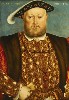
 My Kingdom for a sheep?
Fleas can move 1000 times their own weight. The first
mechanical clock was 30ft high, water powered and invented in
China in 1088. Henry VIII's great-granddad was an Anglesey farmer.
Which of the above is false? Answer; none of them! Pause for incredulous
laughter. However, Henry VIII's great-granddad was an Anglesey
farmer! His name was Owen Tudor and he came from a place called
Penmynydd, between Llangefni and the Menai Straits. Let me explain.
My Kingdom for a sheep?
Fleas can move 1000 times their own weight. The first
mechanical clock was 30ft high, water powered and invented in
China in 1088. Henry VIII's great-granddad was an Anglesey farmer.
Which of the above is false? Answer; none of them! Pause for incredulous
laughter. However, Henry VIII's great-granddad was an Anglesey
farmer! His name was Owen Tudor and he came from a place called
Penmynydd, between Llangefni and the Menai Straits. Let me explain.
At the time of the reign of Henry V, you know, Agincourt and all
that, Owen Tudor left Anglesey to better himself and became a
squire to the king. The king died in 1422 and some years later
his widow, Catherine of Valois, is said to have married Tudor,
although it is possible they were never legally married. Henry's
infant son, Henry VI, succeeded him. The new king was little more
than a pawn in the so-called Wars of the Roses, a series of power
struggles between the ruling House of Lancaster and the rival
House of York. Owen Tudor was a staunch supporter of the king.
In 1461 Tudor led an army into battle against Yorkists forces
at Mortimer's Cross in Herefordshire. The Yorkists side won; Tudor
was killed; Henry VI lost his throne and the Yorkists claimant,
Edward IV, became king. Owens's son Edmund had married Margaret
Beaufort, who was descended from King Edward III's son John of
Gaunt, the Duke of Lancaster. Edmund died while Margaret was pregnant
with their first child, Henry, who was born on January 28, 1457
at Pembroke Castle in Wales. At first Henry was kept hidden in
Wales by his uncle, Jasper Tudor. In 1471 Henry VI died - he may
have been murdered - in the Tower of London, and Henry Tudor became
the Lancastrian claimant to the throne. In 1483 Edward IV died
suddenly and his young sons, Edward V and Richard, "disappeared"
in the Tower of London. Their uncle, who had imprisoned the boys,
swiftly crowned himself Richard III. Not surprisingly, he was
an unpopular king. In 1485 Henry Tudor returned to Wales, raised
an army, invaded England, and defeated Richard III at the battle
of Bosworth Field. Richard died in the battle, and Henry Tudor
became Henry VII, the first Tudor king. And his son, HenryVIII
succeeded him! So there you have it, and not only that, the farm's
still there although unfortunately not open to the public. It
dates from the 16th century, having been rebuilt when the family
fortunes took a sudden upward rise. I wonder why?